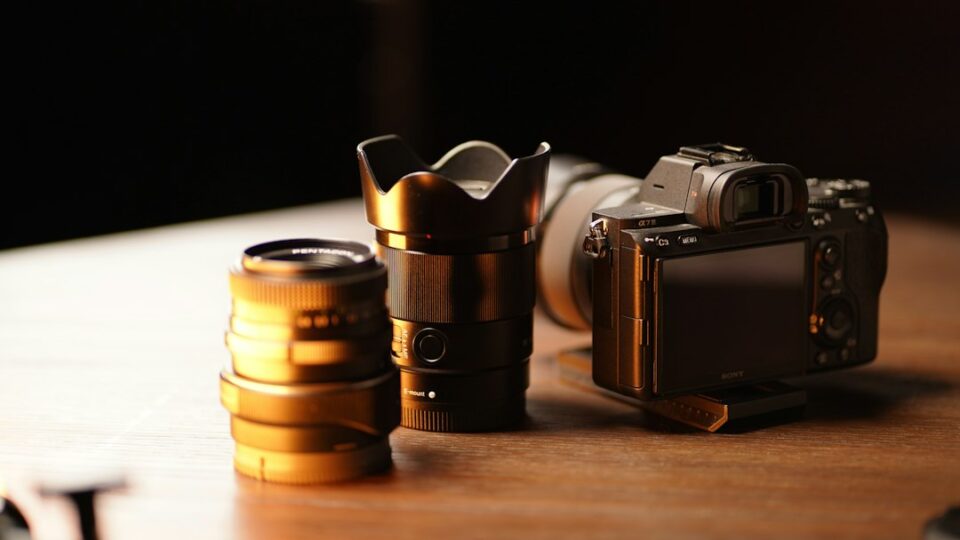
If you’re weighing the 35mm vs 50mm lens decision, here’s the quick, practical answer: on full‑frame, pick 35mm when you want more of the scene, tighter spaces, and environmental storytelling; pick 50mm when you want cleaner subject isolation and flattering portraits with less facial distortion.
On APS‑C, a 35mm behaves like a normal “nifty fifty,” while a 50mm acts like a short tele (about 75–80mm). Most shooters should start with 35mm on APS‑C unless portraits are your top priority and you have room to step back. Below you’ll also find exact working distances for common framings and straightforward depth‑of‑field numbers, so you can tell at a glance whether your space fits the shot you want.
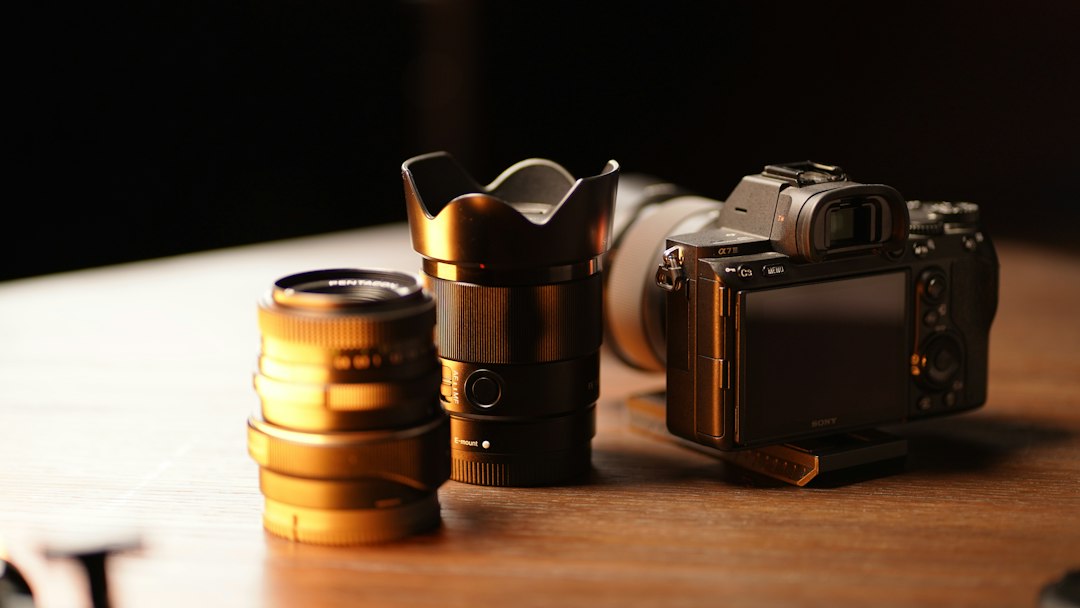
35mm vs 50mm lens: the quick answer (and what to buy)
The core difference is field of view. On full‑frame, 35mm is wider and pulls in context; 50mm is tighter and simplifies your frame. That leads to different strengths: 35mm excels in streets, travel, and indoor scenes where you can’t back up; 50mm suits portraits and simple compositions with stronger background separation at the same distance.
Practical guidance by camera type:
- Full‑frame: 35mm for tight spaces and environmental portraits; 50mm for classic portraits and subject isolation.
- APS‑C (1.5×/1.6× crop): 35mm ≈ 52–56mm equivalent, a great all‑round “normal.” 50mm ≈ 75–80mm, great for head‑and‑shoulders.
- Micro Four Thirds (2× crop): 17mm ≈ 35mm and 25mm ≈ 50mm equivalents.
Common mistakes to avoid:
- Shooting tight headshots with 35mm from very close range. Faces can look stretched at close distances.
- Walking into cramped rooms with only a 50mm on full‑frame or a 50mm on APS‑C. You may not be able to back up enough.
- Ignoring crop factor. A 50mm on APS‑C behaves like a short tele; plan your space accordingly.
- Shooting group photos at f/1.8 and expecting everyone to be sharp. Stop down when multiple faces are at different depths.
At a glance: 35mm vs 50mm on full‑frame
| Feature | 35mm (full‑frame) | 50mm (full‑frame) |
|---|---|---|
| Angle of view (diagonal, approx) | ≈ 63° | ≈ 47° |
| Working distance (typical) | Closer to subjects; easier indoors | Needs more space; better reach for portraits |
| Subject isolation (relative) | Lower at the same distance | Higher at the same distance |
| Distortion risk for tight faces | Higher if you get too close | Lower at flattering distances |
| Indoor usability | Strong in small rooms | Can be tight unless you can back up |
| Typical weight range | ≈ 170–500 g depending on max aperture | ≈ 150–400 g depending on max aperture |
| Typical new/used price range | Often pricier than 50mm; used options vary widely | Often the cheapest prime; many affordable used options |
| Best for | Street, travel, environmental portraits, events in tight spaces | Portraits, detail studies, simple frames, low‑light with blur |
Working distance cheat sheet
| Framing | 35mm FF distance | 50mm FF distance | 35mm APS‑C distance | 50mm APS‑C distance |
|---|---|---|---|---|
| Head‑and‑shoulders | ≈ 0.8 m (2.6 ft) | ≈ 1.2 m (4.0 ft) | ≈ 1.2 m (4.0 ft) | ≈ 1.8 m (6.0 ft) |
| Half‑body | ≈ 1.4 m (4.6 ft) | ≈ 2.0 m (6.6 ft) | ≈ 2.0 m (6.6 ft) | ≈ 3.0 m (9.8 ft) |
| Full‑body | ≈ 2.8 m (9.2 ft) | ≈ 4.0 m (13.1 ft) | ≈ 4.2 m (13.8 ft) | ≈ 6.0 m (19.7 ft) |
Note: example DOF on full‑frame at f/1.8 and 2 m focus distance—35mm yields ≈ 0.35 m of total depth of field; 50mm yields ≈ 0.17 m. Numbers are approximations; actual DOF varies by circle of confusion standards and lens behavior.
If you want a broader primer on why primes are popular for sharpness and speed, this explainer is a helpful foundation: Prime vs Zoom Lens: Know the Difference.
Field of view, perspective, and distortion—why they look different
On full‑frame, 35mm shows a diagonal angle of view around 63°, and 50mm shows about 47°. That sounds abstract until you view a scene: the 35mm includes more foreground, more sides of the room, more sky above the skyline. The 50mm trims the edges, removing distractions and amplifying the subject.
Perspective is the bigger reason they feel different. Perspective depends on camera position. When you move closer to your subject to fill the frame with a wider lens, nearby features grow relatively larger and the background appears to recede. That’s why faces can look stretched with 35mm if you move to within an arm’s length for a tight headshot. With 50mm, you usually step back, which naturally renders proportions more flattering and brings the background “closer” in a visual sense.
How far is “safe” for people photos? For full‑frame, try to keep faces at roughly 1 m or more with 35mm if you want natural proportions, and around 1.2–2 m or more with 50mm for head‑and‑shoulders through half‑body frames. On APS‑C, multiply those distances by the crop factor. If you plan candid street work, the 35mm lets you work closer without blocking foot traffic. If you plan classic portraits, 50mm gives you comfortable space and nicer geometry.
Depth of field and background blur (with real numbers)
At the same subject distance and the same f‑stop, a longer focal length yields a thinner depth of field and, generally, stronger blur. That means if you stand 2 m from your subject at f/1.8, a 50mm will blur the background roughly twice as much as a 35mm. Using the example above on full‑frame at f/1.8 and 2 m, 35mm gives about 35 cm of total depth of field, while 50mm gives about 17 cm.
But match‑framing changes everything. If you use the 35mm and step closer to match the framing of the 50mm, your background blur increases too because distance shrinks. If you step back with the 50mm to match the 35mm’s wider framing, blur decreases. This is why the “which blurs more” debate often ignores the real variable: where you stand.
Practical tips:
- For groups or events with multiple faces at different distances, stop down. On full‑frame, f/2.8–f/4 keeps more faces acceptably sharp, especially with 50mm.
- For environmental portraits, you don’t need maximum blur. Let the room or street remain readable with 35mm at f/2–f/2.8.
- In low light, both 35mm and 50mm primes often offer bright apertures. If both are f/1.8, their light‑gathering is the same; differences in blur come from distance and focal length, not exposure.
Which focal length for portraits, street, travel, and indoors?
Portraits and headshots: 50mm on full‑frame is a friendly baseline for head‑and‑shoulders and half‑body portraits. It lets you step back to flattering distances and cleans up the background. On APS‑C, a 50mm becomes a short tele that tightens even more—great for headshots if you have space. A 35mm shines for environmental portraits where you want to include the scene and the person, but avoid very close tight headshots to reduce perspective stretching.
Street and travel: 35mm is the storytelling workhorse. It captures a person and the space they occupy, feels immersive, and handles small interior spaces. The 50mm is for simpler frames: one subject, one gesture, a cleaner background. If you love layered frames and context, go 35mm. If you prefer quiet, graphic compositions, go 50mm. For low‑light city work, see practical settings and tactics here: The Complete Guide to low light street photography and Mastering low light street photography: settings, gear, and techniques.
Indoors, events, and weddings: In tight spaces, 35mm saves shots. You’ll fit more guests in, show the room, and work closer without blocking the aisle. When you have room to back up and want subject separation (bride and groom during portraits, for example), the 50mm is elegant. Many event photographers carry both and switch based on room size and the desired feel.
Landscapes and environmental work: 35mm adds context and foreground. 50mm compresses slightly and suits minimal, graphic landscapes and detail studies. If the scene is cluttered and you want to clean it up without going telephoto, 50mm is a refined choice.
Crop sensors (APS‑C and MFT): picking the right equivalent
APS‑C math is simple: multiply focal length by ~1.5 (Nikon/Sony/Fujifilm) or ~1.6 (Canon) for the full‑frame equivalent. That puts 35mm around a 52–56mm equivalent “normal” and 50mm around a 75–80mm short tele. The practical effect: a 35mm on APS‑C behaves like a classic 50mm on full‑frame, so it’s an excellent first prime. A 50mm on APS‑C behaves like a portrait lens and needs more working room.
Micro Four Thirds simplifies choices even further: 17mm ≈ 35mm equivalent; 25mm ≈ 50mm equivalent. Pick 17mm if you are often indoors or like environmental portraits; pick 25mm if you prefer portraits and simpler frames.
Adjust your working distances to avoid distortion or cramped framing. Use the cheat sheet distances above as a starting point. If you find yourself pinned against a wall with a 50mm on APS‑C, swap to 35mm (or its equivalent) to get your framing without standing in the hallway. If you’re photographing a single person outdoors and want cleaner separation on APS‑C, the 50mm is your friend.
If you’re still assembling a kit and want a broader shopping map, these guides provide system‑level context and lens families to consider: The complete camera lens buying guide for photographers in 2026 and Your mirrorless camera lenses buying guide for 2026.
Size, weight, price, and value
In most camera systems, 50mm primes are the smallest and least expensive high‑quality lenses you can buy. The common f/1.8 versions are light, affordable on the used market, and sharp. The f/1.4 versions are larger, heavier, and cost more, but they can deliver brighter viewfinders and creamier blur when you need it.
35mm primes cost more on average, especially if you want fast apertures and high corner sharpness. The optical correction required across a wider field can add elements and weight. That said, a 35mm f/1.8 is still very portable and often balances nicely on smaller mirrorless bodies. If you’re budget‑sensitive, it’s hard to beat a 50mm f/1.8 as a first prime; if space is your daily constraint, a 35mm may be the better value because it gets you the shot you’d otherwise miss.
Used‑market tips: 50mm f/1.8 lenses have been made in large numbers for decades, so pricing is usually friendly. Check autofocus compatibility on your mount, look for clean glass, and test focus. For 35mm, prices vary more by brand and maximum aperture; consider last‑generation f/2 or f/1.8 versions for excellent value. Third‑party options can stretch your budget further, and many hold value well if you decide to resell.
What to buy first—and smart alternatives
If you own a full‑frame 24–70 zoom and feel your images look similar across the range, a 50mm f/1.8 adds real subject separation and low‑light capability without bulk. If you own a 28–70 or 28–60 compact zoom and keep running into walls indoors, a 35mm prime opens spaces and lets you include context at brighter apertures. On APS‑C with an 18–55 kit lens, a 35mm prime delivers a normal perspective, better low‑light results, and a different look than your kit at the same focal length because of the faster aperture.
Middle‑ground and adjacent options are worth mentioning. A 40mm prime splits the difference nicely: tighter than 35mm, wider than 50mm, with a natural perspective many shooters love. If you live in tight interiors, a 28mm can be the true everyday lens. If portraits dominate your work and you have space, an 85mm on full‑frame (or ~56mm on APS‑C) gives even more flattering perspective and blur.
Decision checklist: pick your prime in 60 seconds
- Your sensor size: full‑frame, APS‑C, or MFT?
- How much room you usually have: tight rooms vs open spaces?
- Priority: storytelling/context vs subject isolation?
- Primary genres: portraits, street, travel, events, indoor family life?
- Your tolerance for facial distortion: okay with getting close, or prefer to step back?
- Budget/weight preferences: cheapest and lightest now, or willing to pay more for the exact look you want?
FAQs
What does a 50mm lens mean?
A 50mm lens is a fixed‑focal‑length prime where the lens cannot zoom. On full‑frame it shows a diagonal angle of view around 47°, often considered close to a “natural” perspective. On APS‑C it behaves like a 75–80mm short tele, making it suitable for portraits and tighter framing.
What is a 35mm lens best used for?
On full‑frame, 35mm is a wider‑than‑normal prime that’s excellent for street, travel, environmental portraits, and indoor scenes. It captures context and works well in tight spaces. On APS‑C, a 35mm is a “normal” lens that does a bit of everything.
Why does 35mm look so good?
It balances context and intimacy. You can include a person and their surroundings without the exaggerated perspective of ultra‑wide lenses. It also encourages working closer, which feels immersive for documentary and travel work, while still allowing clean compositions.
Is a 35mm lens good for portraits?
Yes for environmental portraits, half‑body, and full‑body frames, especially when you want the scene to help tell the story. For tight headshots, 35mm can exaggerate facial features if you stand too close. In that case, 50mm or longer is usually more flattering, particularly on APS‑C or in small rooms where stepping back is difficult.
What is a prime lens?
A prime lens has a single focal length rather than a zoom range. Primes are popular because they often offer bright maximum apertures, high optical quality, small size, and a consistent look. Many photographers pick a single prime (35mm or 50mm) for long stretches to develop a clear visual style.
If you want to explore the broader pros and cons of primes versus zooms before committing, start here: Prime vs Zoom Lens: Know the Difference and When to Use.